
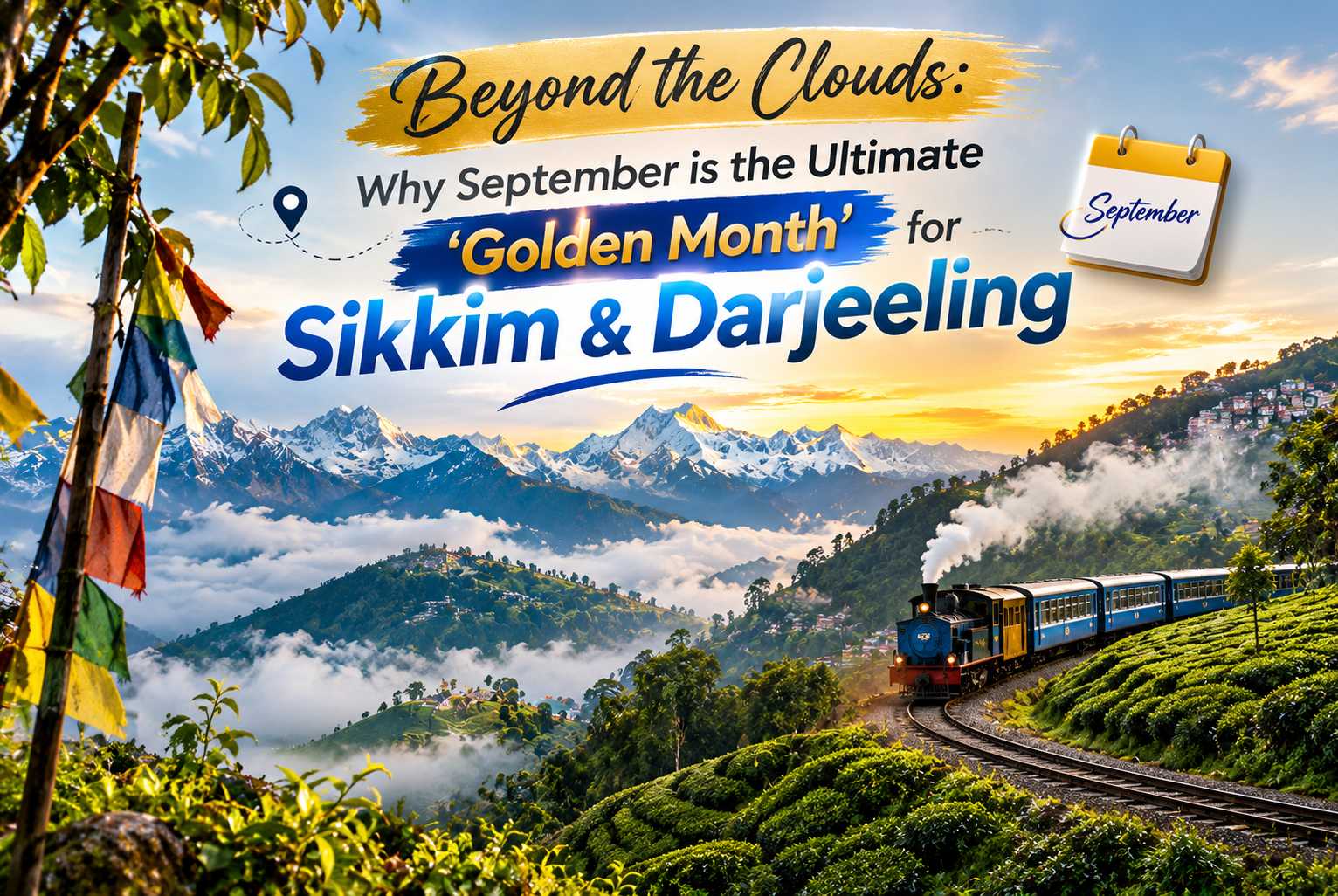
When planning a journey to the Eastern Himalayas, most travelers instinctively look toward the peak holiday seasons of October or the snowy depths of December. However, for the discerning traveler—the one who values pristine landscapes, exclusive experiences, and uncrowded serenity—there is a well-kept secret among Himalayan insiders.
That secret is September.
As the heavy monsoon rains of July and August finally retreat, they leave behind a radically transformed landscape. The dust has been entirely washed from the atmosphere, the alpine forests are bursting with renewed vitality, and the skies open up to reveal a breathtaking, high-definition blue. September is the transitional sweet spot, earning its reputation as the true 'Golden Month' of Himalayan travel.
If you are seeking a premium, unhurried, and visually spectacular escape to Sikkim and Darjeeling, here is why September should be at the very top of your travel calendar.
The Grand Reveal: Uninterrupted Views of Mt. Kanchenjunga
The primary reason travelers flock to Darjeeling and Sikkim is to witness the majesty of Mt. Kanchenjunga, the third-highest mountain peak in the world. However, mountain viewing is entirely at the mercy of the weather. During the summer, haze and heat obscure the peaks. During the monsoon, dense cloud cover hides the ranges completely.
Enter September. The torrential rains of the preceding months act as nature’s ultimate air purifier. By the second week of September, the lingering monsoon clouds part like a massive theatrical curtain, offering what are undeniably the sharpest, most crystalline views of the year.
Waking up in a premium suite in Darjeeling or Pelling during this month offers a surreal experience. The sun rises over a sea of low-lying clouds, striking the snow-capped peaks of the Sleeping Buddha range and turning them a brilliant, luminescent gold. Because the atmospheric moisture is dropping but the harsh winter dry spell hasn't yet begun, photographers and nature lovers are treated to a clarity of light that simply does not exist at any other time of the year.
Darjeeling in September: The Autumn Flush and Heritage Charm
Darjeeling, the Queen of the Hills, operates on a rhythm dictated by its world-famous tea estates. Visiting in September aligns perfectly with one of the most celebrated periods in the region’s agricultural calendar.
The Magic of the Autumn Flush
Tea connoisseurs know that Darjeeling produces different "flushes" or harvests throughout the year. Following the monsoon, the tea bushes experience a period of rapid, lush growth, leading to the highly anticipated Autumn Flush. The leaves harvested in September and October produce a tea that is full-bodied, slightly darker, and possesses a distinct, rich flavor profile characterized by notes of ripe fruit and muscatel.
The Premium Tea Estate Experience: In September, booking a stay at a heritage tea bungalow is an experience in pure, colonial-era luxury. Imagine sitting on a sprawling wooden veranda, wrapped in a light cashmere shawl, overlooking acres of vibrant, rain-washed green tea terraces. You can partake in exclusive, guided tea-tasting sessions right as the autumn harvest begins, interacting with the estate managers and estate workers in a relaxed, unhurried environment.
A Crowd-Free Toy Train Journey
The Darjeeling Himalayan Railway, a UNESCO World Heritage site, is a quintessential experience. During the peak month of October, securing a first-class ticket on the steam-hauled joyride can be a frantic, competitive endeavor, and the viewpoints at Batasia Loop are often swarming with tourists. In September, you have the luxury of space. The iconic steam engine chugs through the cool, crisp mountain air, winding past pristine forests and quiet villages, allowing you to capture unobstructed photographs and truly absorb the romantic nostalgia of the journey.
Sikkim’s Post-Monsoon Renaissance
While Darjeeling offers colonial elegance, Sikkim offers raw, untamed Himalayan mysticism. September acts as an awakening for the entire state, opening up regions that were largely inaccessible during the heavy rains.
Vibrant Valleys and Thundering Rivers
In North Sikkim, destinations like Lachen, Lachung, and the Yumthang Valley begin to welcome travelers again. The rivers, particularly the Teesta, are still swelling with the last of the monsoon runoff, making for dramatic, powerful landscapes. The high-altitude meadows are not yet frozen; instead, they are covered in a lush carpet of post-monsoon flora. The waterfalls that line the treacherous, winding roads of North Sikkim—such as the Bhim Nala and Naga Falls—are flowing with incredible, photogenic force.
Spiritual Solitude at the Monasteries
Sikkim is a deeply spiritual land, home to some of the most significant Buddhist monasteries in India, including Rumtek, Pemayangtse, and Tashiding. Visiting these sacred spaces in September is a profoundly different experience than visiting during the peak holiday rush.
Without the clamor of large tourist groups, you can experience the monasteries as they were meant to be experienced: in absolute peace. You can sit quietly in the prayer halls, listen to the rhythmic chanting of the monks, and observe the intricate, centuries-old thangka paintings without feeling rushed. The cool September breeze spinning the golden prayer wheels carries a sense of serenity that is perfect for travelers seeking a restorative, mindful getaway.
Pelling: The Crown Jewel of September
If there is one destination in Sikkim that peaks in September, it is Pelling. Located in West Sikkim, Pelling is famous for being closer to Mt. Kanchenjunga than any other major town in the state. In September, the newly constructed Pelling Skywalk—India’s first glass-bottom skywalk—offers terrifyingly beautiful, crystal-clear views of the valley floor and the towering peaks above. The nearby Pemayangtse Monastery and the atmospheric ruins of Rabdentse are surrounded by lush, overgrown forests, making a walk through the area feel like an exploration of a forgotten, mythical kingdom.
The Exclusivity Factor: Why the 'Shoulder Season' is the Premium Choice
The most compelling reason to travel in September boils down to exclusivity. In the Indian travel industry, October marks the beginning of the massive holiday season, driven by Durga Puja, Diwali, and school vacations. By mid-October, hotel rates skyrocket, roads are congested, and viewpoints are crowded.
September is the "shoulder season." It sits perfectly between the end of the rains and the arrival of the massive tourist wave. For the premium traveler, this translates to several distinct advantages:
-
Impeccable Hospitality: Luxury boutique hotels and heritage resorts are not operating at maximum capacity. This means the staff has the time and bandwidth to offer truly personalized, hyper-attentive service. From customized culinary requests to flexible dining times, you receive the VIP treatment.
-
Solitude at Iconic Sights: Whether you are watching the sunrise at Tiger Hill in Darjeeling or gazing at the serene waters of Gurudongmar Lake in Sikkim, you are sharing the view with a handful of people rather than a massive crowd.
-
Better Road Conditions: Traffic snarls on the narrow mountain roads of Darjeeling and Gangtok are notoriously frustrating during peak season. In September, transit times are significantly reduced, allowing you to spend more time enjoying your resort or exploring sights, and less time sitting in a vehicle.
Designing the Perfect September Itinerary
To maximize the magic of the Golden Month, your itinerary should prioritize comfort, pacing, and strategic routing.
- Pacing is Everything: Do not rush. Instead of trying to cover all of Northeast India in a week, dedicate 5 to 7 days purely to the Darjeeling and South/West Sikkim circuit. Spend two nights on a tea estate, followed by three nights in a premium mountain-facing resort in Pelling or Gangtok.
- Private, Premium Transit: The roads are still recovering from the monsoon. Ensure your travel package includes a heavy-duty, luxury SUV (such as an Innova Crysta) with a seasoned local driver who knows the terrain intimately.
- Curated Experiences: Move beyond standard sightseeing. Ask your travel partner to arrange a private momo-making masterclass, a guided botanical walk through a rhododendron sanctuary, or an exclusive dinner under the stars overlooking the Teesta valley.
Packing for the Transition
September weather in the Himalayas is famously fickle—it is the bridge between summer and winter.
-
Layering is Key: The days are generally bright, sunny, and pleasantly warm, perfect for a t-shirt and a light fleece. However, as soon as the sun dips behind the mountains, the temperature drops rapidly. Pack high-quality thermals and a medium-weight jacket for the evenings.
-
Rain Preparedness: While the heavy monsoons are gone, localized, brief autumnal showers are still possible. A lightweight, packable rainbreaker and water-resistant walking shoes are highly recommended.
-
Sun Protection: The crisp, dust-free mountain air means the UV index can be surprisingly high during the day. High-SPF sunscreen and polarized sunglasses are essential, especially when venturing to higher altitudes in Sikkim.
Secure Your Golden Month Escape
Traveling in September is a statement. It says that you prioritize quality over convenience, serenity over crowds, and raw natural beauty over peak-season clamor.
Darjeeling and Sikkim are waiting to reveal their most vibrant, crystal-clear versions of themselves. As the clouds part and the mighty Kanchenjunga emerges against a sapphire sky, you will quickly realize why those in the know consider September the undisputed Golden Month of the Himalayas.
Ready to beat the October rush? Secure your premium, customized September itinerary for Sikkim and Darjeeling today. Experience the Eastern Himalayas with unparalleled exclusivity, curated luxury, and absolute peace.


(0) Comments:
Leave a Reply