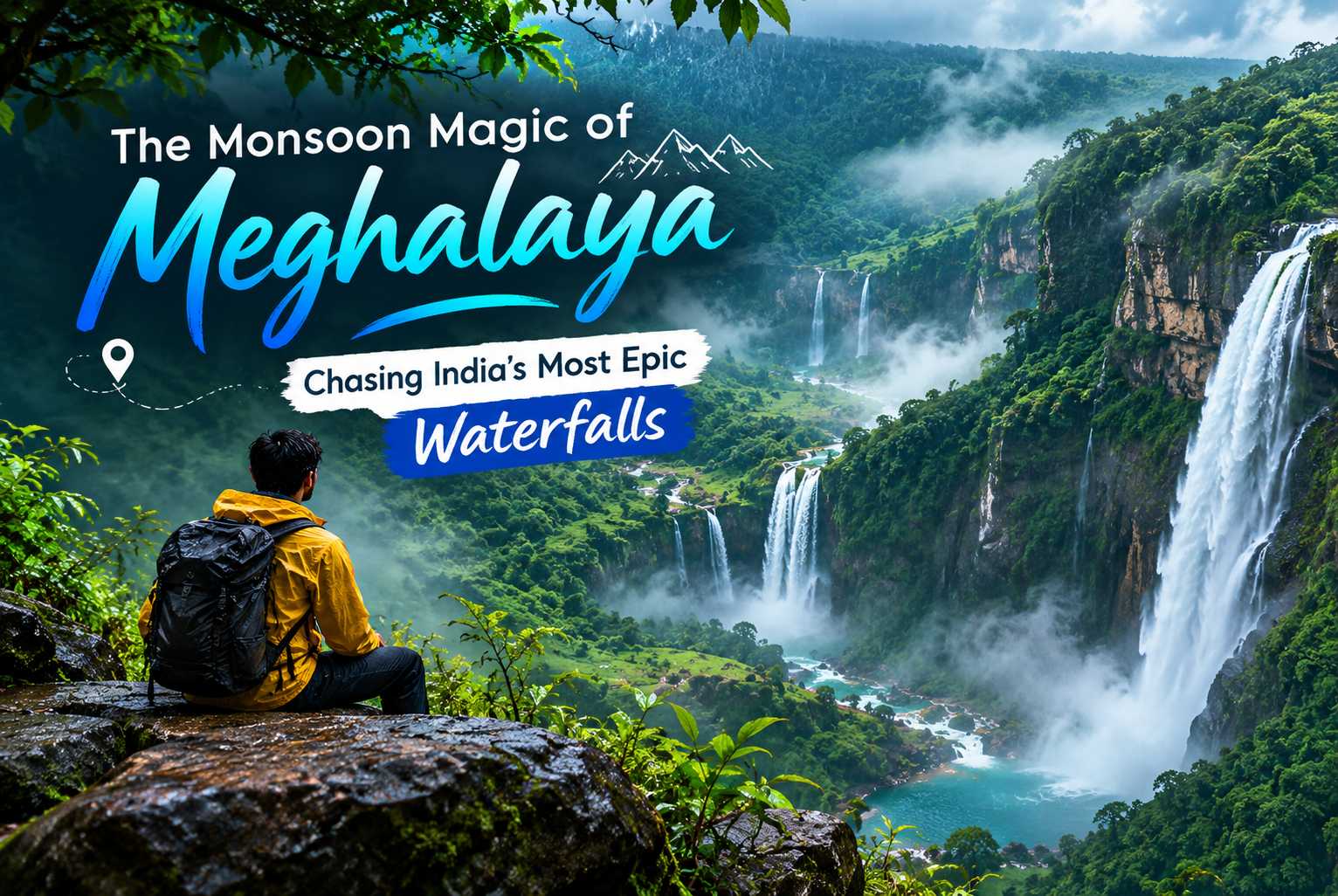
Are you looking for an ordinary, predictable vacation, or are you chasing a masterpiece? When the calendar turns to August, the northeastern state of Meghalaya transforms from a serene hill station into the undisputed heavyweight champion of the Indian monsoon. Translating literally to the "Abode of Clouds," Meghalaya doesn't just receive rain; it orchestrates a spectacular, theatrical collision of weather and geography. The result is a landscape that produces some of the most dramatic, thunderous, and awe-inspiring waterfalls on Earth.
For decades, conventional travel advice has steered tourists away from the rainy season. But the discerning traveler—the one who seeks exclusivity, raw natural power, and unparalleled photography—knows that August is the ultimate golden window. This is when the rivers swell, the valleys turn an impossible shade of emerald, and the waterfalls flow with a hydraulic roar that vibrates in your chest.
This comprehensive guide will walk you through why an August expedition to Meghalaya is the premium travel experience you didn’t know you were missing, detailing the epic waterfalls you must chase and the luxurious ways to experience them.
Why August? The Science and the Magic of the Meghalayan Monsoon
To truly appreciate the monsoon here, one must understand the unique geography of the region. The state is essentially a high plateau acting as a sudden geological wall. When the moisture-laden southwest monsoon winds sweep up from the Bay of Bengal, they hit the sheer cliffs of the Khasi, Garo, and Jaintia Hills. With nowhere else to go, the clouds are forced upwards, cooling rapidly and dumping their massive water load onto the towns of Cherrapunji (Sohra) and Mawsynram—two of the wettest places on the planet.
By the time August arrives, the earth has fully absorbed the early summer rains. The aquifers are full, the limestone caves are echoing with subterranean rivers, and the surface runoff is at its absolute peak.
Visiting in August means witnessing the landscape exactly as nature intended it to be seen. The skies are a dramatic canvas of charcoal and silver. The air is incredibly crisp, washed clean of any dust, carrying the rich, earthy scent of petrichor and pine. Unlike the dry winter months when many of the state's famous waterfalls reduce to mere trickles, August guarantees a high-impact, cinematic viewing experience.
The Titans of the Khasi Hills: Waterfalls You Must Experience
Meghalaya is home to countless cascades, but during the monsoon, a select few transform into titans. Here are the epic waterfalls that should anchor your August itinerary.
1. The Roar of Nohkalikai Falls
To understand the sheer power of the Meghalayan monsoon, your first stop must be the mighty Nohkalikai Falls. Plummeting a staggering 340 meters (1,115 feet) straight down a sheer cliff, it proudly holds the title of the tallest plunge waterfall in India.
During the winter, Nohkalikai is a graceful white ribbon falling into an emerald pool. But in August? It is an absolute monster. The water volume increases tenfold, creating a thunderous roar that you can hear long before you reach the viewing gallery. The impact of the water hitting the plunge pool generates a massive column of mist that frequently rises back up to the top of the cliff, engulfing the viewing platforms in a cool, refreshing spray.
Local Lore: The breathtaking beauty of Nohkalikai is sharply contrasted by its tragic local legend. The waterfall is named after a Khasi woman named Likai, who, overcome with grief after a horrific family tragedy, is said to have thrown herself off the cliff. Staring at the massive, unstoppable force of the water during the monsoon, the haunting history of the falls adds a layer of profound reverence to the viewing experience.
2. The Majesty of the Seven Sisters Falls (Nohsngithiang)
Just a short, scenic drive from Nohkalikai lies Nohsngithiang, universally recognized as the Seven Sisters Falls. As a rain-fed cascade, this sprawling geological wonder reaches its absolute zenith during the height of the southwest monsoon.
Unlike a single plunge, the Seven Sisters are a segmented waterfall. Seven distinct, powerful streams cascade side-by-side down the sheer limestone cliffs of the East Khasi Hills, carving bright white paths through the vibrant, rain-soaked green slopes. The falls represent the seven sister states of Northeast India.
The Viewing Experience: The best time to view the Seven Sisters in August is late afternoon. When the heavy monsoon clouds briefly part, the setting sun hits the cascading water, occasionally creating brilliant, massive rainbows that span across the gorge. Because the falls are entirely rain-dependent, visiting in August is the only way to guarantee that all seven "sisters" are present and flowing with full vitality.
3. The Three-Tiered Wonder of Wei Sawdong
While Nohkalikai and the Seven Sisters offer grand, panoramic viewpoints, Wei Sawdong offers an intimate, immersive jungle adventure. Located closer to the ground level, Wei Sawdong is a stunning, three-tiered waterfall known for its crystal-clear, blue-green pools.
During the August rains, the trek down to Wei Sawdong is an adventure in itself. The path, often constructed from raw bamboo by local villagers, winds down through dense, dripping jungle foliage. Upon reaching the bottom, the sight of the water cascading perfectly from one tiered pool into the next is mesmerizing. The monsoon volume adds a fierce energy to the falls, churning the usually placid pools into rushing rapids. It is a favorite spot for nature photographers looking to capture long-exposure shots of the silken, cascading water framed by lush ferns and moss-covered rocks.
4. The Wide Expanse of Dainthlen Falls
If Nohkalikai is about vertical height, Dainthlen Falls is about horizontal expanse. In the dry season, visitors can often walk right across the rocky riverbed near the lip of the falls. In August, this is entirely impossible—and for good reason. The river swells dramatically, rushing over the wide, flat rock faces before plunging violently into the gorge below. The sheer width of the rushing water makes Dainthlen one of the most accessible and impressive monsoon sights in Cherrapunji.
Living in the Clouds: The Premium Monsoon Retreat
Many travelers instinctively shy away from monsoon travel, associating it with muddy shoes, cancelled plans, and logistical nightmares. However, the discerning adventurer knows that the secret to enjoying this dramatic season lies entirely in how you travel.
Meghalaya has seen a rapid rise in premium, boutique hospitality. Today, experiencing the monsoon doesn't mean roughing it. Imagine checking into a luxury cliffside eco-resort in Sohra. Your suite features floor-to-ceiling glass windows and a private, covered balcony perched right on the edge of a valley.
In August, these valleys play a relentless game of hide-and-seek. One moment, you are staring at a panoramic view of the Bangladesh plains in the distance; the next, a massive, brilliant white cloud rolls right through your balcony, dropping the visibility to zero and wrapping your room in a cool, atmospheric mist.
The Luxury of Slow Travel Monsoon travel is inherently slower, which perfectly aligns with a premium vacation mindset. It is about waking up late to the sound of torrential rain on the roof, enjoying a warm cup of locally sourced Khasi tea, and indulging in hot, freshly prepared local delicacies while the storm rages outside. When the rain breaks—as it frequently does in dramatic, sudden halts—you step into a private, climate-controlled SUV with an expert local guide who knows exactly which viewpoints to hit before the next cloud rolls in.
With luxury stays, robust private transport, and expert local navigation, the monsoon is transformed from a logistical challenge into an exclusive, cozy, and highly restorative retreat.
Beyond the Falls: Other Monsoon Marvels
While the waterfalls are the primary draw, August in Meghalaya breathes life into several other unique attractions:
-
The Living Root Bridges: The bio-engineered marvels of the Khasi and Jaintia people, such as the famous Double Decker Root Bridge in Nongriat, are spectacular in the rain. The ancient rubber tree roots glisten, and the jungle surrounding them is violently green and teeming with life. The rivers flowing beneath the bridges, usually quiet streams, turn into roaring torrents, emphasizing the incredible structural integrity of these natural bridges.
-
Mawlynnong Village: Famous as Asia’s Cleanest Village, Mawlynnong looks freshly scrubbed during the monsoon. The stone-paved pathways shine, the meticulously kept gardens overflow with tropical monsoon blooms, and the surrounding canopy walks offer incredible views of the misty plains.
-
Sacred Groves of Mawphlang: These ancient forests, preserved by local religious beliefs, take on a mystical, almost eerie quality in the August mist. The dense canopy often blocks out the rain, creating a humid, quiet microclimate inside the grove where rare orchids bloom and ancient monoliths stand wrapped in bright green moss.
Essential Tips for a Premium August Expedition
To ensure your monsoon chase is comfortable and spectacular, preparation is key:
-
Invest in High-End Waterproofing: Leave the flimsy ponchos behind. Bring a high-quality, breathable GORE-TEX rain jacket and waterproof trekking pants. Good waterproof boots with deep treads are essential for navigating damp, mossy stone paths safely.
-
Protect Your Gear: If you are bringing expensive camera equipment to capture the waterfalls, invest in specialized dry bags and robust rain sleeves for your lenses. The mist from falls like Nohkalikai can soak a camera from hundreds of feet away.
-
Embrace Flexibility: Monsoon weather is commanding and unpredictable. A premium tour operator will build "buffer time" into your itinerary. If a sudden downpour obscures a viewpoint, a good guide will pivot to an indoor cultural experience or a cozy café stop until the weather clears.
-
Book Private, Heavy-Duty Transport: August is not the time for shared cabs or small hatchbacks. Ensure your travel package includes a private SUV (like an Innova Crysta) with an experienced local driver who is highly accustomed to navigating wet, winding hill roads.
The Clouds Are Calling
There is a distinct, quiet thrill in traveling against the grain. While the masses wait for the dry, crowded winter months to visit the Northeast, the bold traveler heads straight into the heart of the storm.
Meghalaya in August is not a polite, quiet vacation. It is a dynamic, multi-sensory immersion into one of the most powerful natural phenomena on the planet. It is the deep rumble of Nohkalikai, the sweeping grandeur of the Seven Sisters, and the unparalleled luxury of watching a storm roll through the mountains from the comfort of a cliffside suite.
Don't let another monsoon pass you by. The waterfalls are roaring, the valleys are waiting, and the clouds are calling.
Ready to chase the ultimate monsoon masterpiece? Secure your premium, customized August Meghalaya itinerary today. Experience the raw power of the Khasi Hills with the comfort, safety, and luxury you deserve.

(0) Comments:
Leave a Reply