
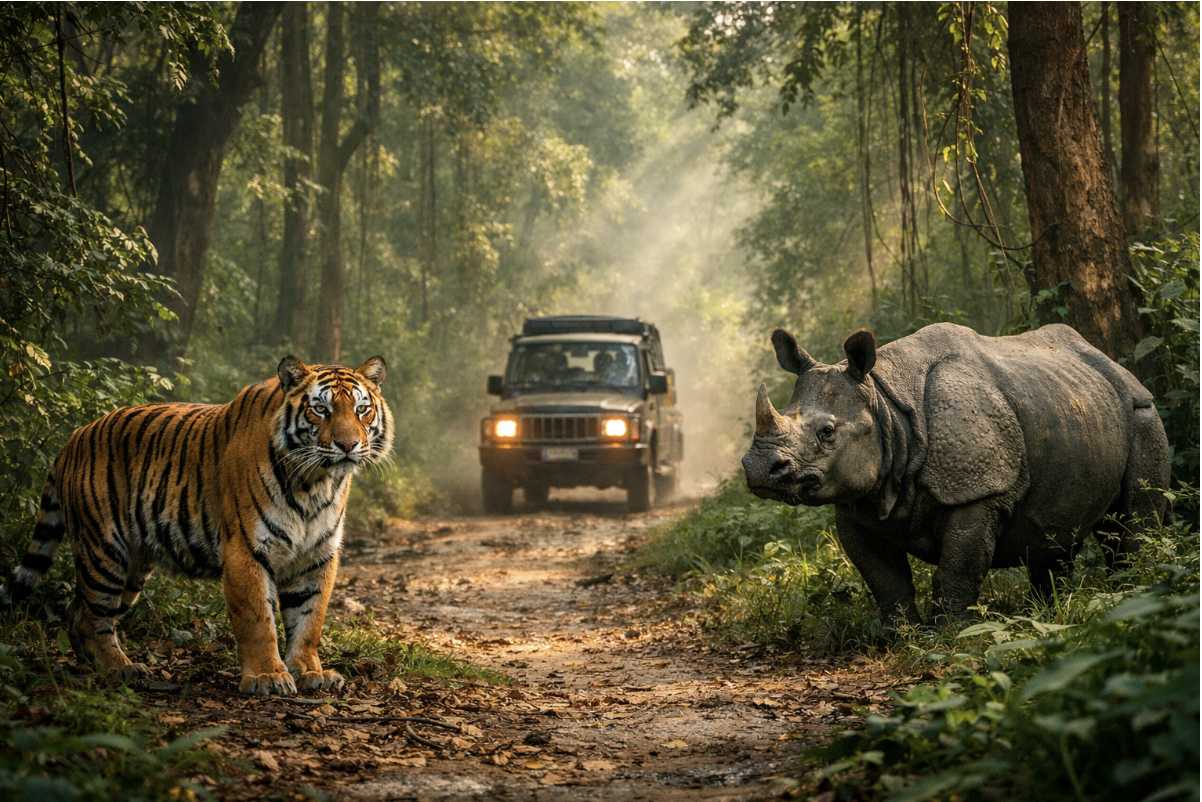
The North East of India, also known as the Seven Sisters, along with Sikkim, is a geographical wonder.
The Wildlife Sanctuaries and National Parks in North East India are not just travel destinations, but they are places where the forest talks to you in its own way. From hidden wildlife sanctuaries to iconic national parks in North East India, this region holds some of the purest wildlife experiences for wildlife lovers like you.
In this blog, we’re going to take you through some of the top Wildlife Sanctuaries and National Parks in India. So, let’s start….
How many Wildlife Sanctuaries and National Parks are there in Northeast India?
North East India has 15+ National Parks and 60+ Wildlife Sanctuaries spread across Assam, Arunachal Pradesh, Meghalaya, Manipur, Mizoram, Nagaland, Tripura, and Sikkim.
Together, these Wildlife Sanctuaries and National Parks protect rare ecosystems, endangered species, and some of the last untouched forests in National Parks in India.
List of Wildlife Sanctuaries and National Parks in North East India
North East India is packed with tropical rainforests, alpine meadows and expansive grasslands. This diversity favours an astonishing number of flora and fauna, including some of which are endemic and not present anywhere on earth.
1. Kaziranga National Park in Assam
If you want a guaranteed "wow" moment, then Kaziranga should be on your list. It’s a UNESCO World Heritage site, and honestly, it’s the best place on the planet to see the Great Indian One-Horned Rhino. Here, you aren't just looking for them; they are everywhere!
-
The Vibe: This national park has the highest density of tigers, too, though they’re masters of hiding in the tall grasses.
-
Key Highlight: It hosts over 2,200 rhinos, roughly two-thirds of the world’s population.
-
Fauna: Rhinos, tigers, elephants, and wild water buffalo.
-
Pro Tip: You should go between November and April. Always try to grab an early morning elephant safari (Approx. INR 750 for Indians), because being at eye-level with a rhino in the morning mist is something you'll never forget.
2. Manas National Park in Assam
If Kaziranga is about the animals, Manas is about the amazing landscape. It is located directly at the foothills of the Himalayas and Bhutan. It has the crystal-blue water of the Manas River that runs through the park.
-
The Vibe: Peaceful but packed with rare finds.
-
Key Highlight: A UNESCO World Heritage site and the only home to the world’s rarest pig, the Pygmy Hog.
-
Fauna: Pygmy Hog, Golden Langur, Hispid Hare, and the Assam Roofed Turtle.
-
Pro Tip: Try to stay at such a forest lodge, from where you can listen to the river while looking across into Bhutan is pure magic.
3. Nameri National Park in Assam
This is for the person who wants to get out of the jeep and actually walk. Unlike most national parks, you can explore Nameri on foot with a forest guard. It’s an intimate, sensory experience for anyone who likes wildlife in the open air.
-
The Vibe: Here, adventure is mixed with birdwatching. Here, you should think of river rafting and forest trekking instead of just driving.
-
Key Highlight: The last stronghold of the critically endangered White-winged Wood Duck.
-
Fauna: Elephants, tigers, leopards, and over 300 species of birds, including the Great Pied Hornbill.
-
Pro Tip: Go river rafting on the Jia Bhoroli River. It’s not "white-water" crazy, but it’s a gentle drift that offers the best views of water birds and elephants drinking at the bank.
4. Dibru-Saikhowa National Park in Assam
This is one of the most unique national parks because it’s a river island. It’s a shifting landscape of swamps, marshes, and thickets bounded by the Brahmaputra and Lohit rivers.
-
The Vibe: This is a wetland wonderland. Most of your exploring happens by boat, which gives your whole trip a very calm and quiet feel.
-
Key Highlight: Famous for its "Feral Horses", which are descendants of army horses let loose after World War II that have lived wild for generations.
-
Fauna: Feral horses, Gangetic River Dolphins, and the Hoolock Gibbon.
-
Pro Tip: Try to visit during the winter months for bird watching because thousands of migratory birds make these wetlands their home, and the boat safaris at sunset are unbeatable.
5. Orang National Park in Assam
People call the Orang National Park the "Mini Kaziranga" because the landscape looks almost identical, but here’s the secret: it’s much smaller and far less crowded. You get that "private safari" feeling without the long queues.
-
The Vibe: Quiet, focused, and underrated. It’s the only rhino stronghold on the north bank of the Brahmaputra.
-
Key Highlight: One of the highest tiger densities in the country relative to its small size.
-
Fauna: Great Indian Rhinoceros, Bengal Tiger, and the rare Bengal Florican.
-
Pro Tip: Because it’s smaller, you can cover it in a single morning. It’s the perfect "hidden gem national park" to hit if you find Kaziranga too busy.
6. Raimona National Park in Assam
One of the newest additions to Assam's list (notified in 2021), Raimona is legendary for its massive elephant herds. It sits in a transboundary landscape that connects with forests in Bhutan.
-
The Vibe: Fresh and lush. It feels like a secret garden that the world hasn't fully discovered yet.
-
Key Highlight: A primary habitat for the Gee’s Golden Langur—one of the world’s most endangered (and beautiful) primates.
-
Fauna: Golden Langur, Asian Elephant, Clouded Leopard, and over 150 species of butterflies.
-
Pro Tip: Bring a good camera for butterflies. The Ultapani forest range within the park is famous for "butterfly clouds" that are unlike anything else in India.
7. Dehing Patkai National Park in Assam
This is the "Amazon of the East." It is the only lowland rainforest in India, and when you step inside, the canopy is so thick that it feels like twilight even at noon.
-
The Vibe: Humid, green, and wild. It’s a four-layered rainforest where everything is covered in orchids and ferns.
-
Key Highlight: It is the only place in the world where seven different species of wild cats live in the same forest.
-
Fauna: Tiger, Leopard, Clouded Leopard, Marbled Cat, Golden Cat, Jungle Cat, and Leopard Cat.
-
Pro Tip: Wear anti-leech socks! It’s a true rainforest, and if you're trekking, the leeches will find you. But the chance to see a Hoolock Gibbon in the canopy makes it totally worth it.
8. Pobitora Wildlife Sanctuary in Assam
If you have a short layover in Guwahati and still want a rhino encounter, go here. It’s a small pocket of land (just 38 sq km), but it packs a massive punch. I like to think of it as the "concentrated version" of Kaziranga.
-
The Vibe: Intense and intimate. Because the area is small, you don't have to search for the rhinos; they are practically waiting for you.
-
Key Highlight: It holds the highest density of one-horned rhinos in the world. You are almost guaranteed a sighting within ten minutes of entering the gate.
-
Fauna: One-horned rhinos, wild boars, and a staggering variety of migratory birds in the winter.
-
Pro Tip: Since it's only about 50 km from Guwahati, you can do this as a day trip. Leave early in the morning, grab a jeep safari, and you can be back in the city for lunch.
9. Namdapha National Park in Arunachal Pradesh
This one is for the adventurer in you. It’s huge, remote, and spans from low tropical jungles all the way up to snow-capped Himalayan peaks. Biologists call it a "dream" because the biodiversity is just insane.
-
The Vibe: Raw, rugged, and mysterious. It’s a place where you feel like an explorer rather than a tourist.
-
Key Highlight: It is the only park on Earth where you could technically find four big cats—Tiger, Leopard, Snow Leopard, and Clouded Leopard—within the same protected area.
-
Fauna: It’s also a stronghold for the critically endangered Hoolock Gibbon.
-
Pro Tip: Don't just stay at the edge. To really see Namdapha, you need to trek and camp inside. The "Haldibari" trek is a classic but just make sure you have your Inner Line Permit (ILP) ready before you head out.
10. Mouling National Park in Arunachal Pradesh
Located in the Upper Siang district, Mouling is part of the massive Dihang-Dibang Biosphere Reserve. It’s named after a nearby peak that translates to "red poison" or "red blood," referring to the red latex of a local tree species.
-
The Vibe: This is one of the least explored national parks in India, surrounded by deep gorges and the mighty Siang River.
-
Key Highlight: A rare sanctuary for the Red Panda and the Takin (a strange, beautiful goat-antelope).
-
Fauna: Keep an eye out for the Serow, Goral, and the elusive Snow Leopard in the higher reaches.
-
Pro Tip: Here, access is tough, especially during the rains. The best time to visit is between November and February when the mountain air is crisp, and the trails are manageable.
11. Pakke (Pakhui) Tiger Reserve in Arunachal Pradesh
Pakke is a heartwarming success story. It’s famous not just for its tigers, but for the way the local Nyishi tribe has turned from hunters into protectors of the forest.
-
The Vibe: It feels like a community-run sanctuary where the bond between people and nature is visible.
-
Key Highlight: The Hornbill Nest Adoption Program. Locals guard the nests of these majestic birds, ensuring their survival.
-
Fauna: It’s a paradise for Hornbills (Great, Wreathed, Oriental Pied, and Rufous-necked).
-
Pro Tip: Try to time your visit around the Pakke Paga Hornbill Festival. It’s an incredible celebration of tribal culture and conservation that will give you goosebumps.
12. Eagle Nest Wildlife Sanctuary in Arunachal Pradesh
If you are even slightly into birdwatching, Eagle Nest is your Holy Grail. It gained worldwide fame in 1995 when a bird species completely new to science was discovered here.
-
The Vibe: A quiet, high-altitude sanctuary for the senses. It’s famous for its "mishmi" hills and misty temperate forests.
-
Key Highlight: Home to the Bugun Liocichla, a stunningly colourful bird found nowhere else on the planet.
-
Fauna: It also hosts the Red Panda and the Arunachal Macaque.
-
Pro Tip: Pack your best binoculars and a heavy jacket. Even in the daytime, the temperature can drop quickly, and you’ll want to be ready when that rare flash of colour moves through the trees.
13. Sessa Orchid Sanctuary in Arunachal Pradesh
This isn't your typical wildlife park. Instead of big cats, the "stars" here are the flowers. It’s the first sanctuary in India dedicated solely to the conservation of orchids.
-
The Vibe: Like walking through a natural cathedral of flowers. It’s lush, humid, and incredibly fragrant.
-
Key Highlight: Over 200 species of orchids grow here naturally, including rare, endangered, and medicinal varieties.
-
Flora: Look for the "Lost Orchid" and the various species of Pitcher Plants that dot the landscape.
-
Pro Tip: Visit between October and April to see the orchids in full bloom. It’s located right on the way to Tawang, so it’s the perfect spot to stretch your legs and breathe in the floral air.
14. Nokrek National Park in Meghalaya
If you want to see where nature is at its most primal, head to the Tura Range. Nokrek is a UNESCO Biosphere Reserve and serves as the "mother of all rivers" for the Garo Hills. It is a dense, high-altitude forest that feels heavy with the scent of wild citrus.
-
The Vibe: It feels like a prehistoric garden where rare plants have survived for millennia.
-
Key Highlight: It is the birthplace of the Citrus indica (the mother of all citrus fruits) and a vital refuge for the Hoolock Gibbon.
-
Fauna: Aside from the apes, look out for the Stump-tailed Macaque and the rare Red Panda.
-
Pro Tip: This is a hiker’s paradise. If you love hiking, then don’t miss the trek to Orange Village nearby to taste the famous Memang Narang (wild oranges) that grow naturally here.
15. Balpakram National Park in Meghalaya
Locals call this the "Land of Spirits," believing that the souls of the departed rest here before their final journey. It is a massive canyon landscape, often compared to the Grand Canyon, that was carved deep into the earth.
-
The Vibe: The cliffs here are enough to make you feel wondrous, even before you see any animals.
-
Key Highlight: The Balpakram Plateau, where the unique rock formations and fossils suggest that this high-altitude land was once under the sea.
-
Fauna: It is a major corridor for Asian Elephants and a home for the elusive Golden Cat and Red Panda.
-
Pro Tip: You should pack light but dress in layers for protection because the weather at the edge of the canyons can change in minutes, shifting from bright sunshine to a thick, ghostly mist.
16. Keibul Lamjao National Park in Manipur
You have to see Keibul Lamjao National Park to believe it. It’s the world's only floating national park, located right on Loktak Lake. The ground you walk on, called Phumdis, is actually a thick mat of floating vegetation and soil.
-
The Vibe: You’ll be taking a boat through the swamp to spot the Sangai.
-
The Sangai: This is the last natural habitat of the "dancing deer." They are called that because of their delicate, bouncy gait as they navigate the floating islands. Actually, it’s a necessary survival skill so they don't fall through the vegetation!
-
Pro Tip: Rent a traditional canoe (longboat) at dawn. Watching the sunrise over the floating islands while the Sangai grazes in the distance will be a spiritual experience for you.
17. Shirui National Park in Manipur
This national park is small but incredibly precious. Located in the Ukhrul district, it is a high-altitude sanctuary specifically designed to protect one of the world’s most exclusive flowers.
-
The Vibe: It’s a mountain-top sanctuary where the clouds literally drift through the trees.
-
Key Highlight: The Shirui Lily. This pale pink, bell-shaped flower grows nowhere else on the planet. It belongs only to these specific slopes.
-
Fauna/Flora: While famous for the lily, the park also hosts rare birds like Mrs Hume's Pheasant.
-
Pro Tip: You have a very narrow window to explore this place. Try to visit in May or June if you want to see the lilies in bloom. Outside of these months, the trek is still beautiful, but the "star" of the show will be sleeping.
18. Intanki (Ntangki) National Park in Nagaland
Deep in the Peren district, Intanki is Nagaland’s premier wildlife destination. It is a vast expanse of equatorial forest that feels like a fortress of green in the middle of the hills.
-
The Vibe: It’s a silent and mysterious spot. It doesn't get the tourist traffic of Kaziranga, which means you often have the jungle all to yourself.
-
Key Highlight: It is one of the few places where you can find the Asian Forest Tortoise, the largest tortoise in mainland Asia.
-
Fauna: Look for Black Storks, Sloth Bears, and the rare Hoolock Gibbon.
-
Pro Tip: Because this park is quite remote, you'll need to coordinate your visit through the Nagaland Forest Department. It’s the perfect spot for you if you want to truly unplug from the world.
19. Murlen National Park in Mizoram
We’ve heard Murlen called the "Land of No Return," not because it’s dangerous, but because the forest is so thick that in some spots, not even a ray of sun can touch the ground. It’s a place of mystery where the canopy is a dense, interlocking puzzle of green.
-
The Vibe: Walking here feels like moving through a deep, green tunnel where every turn reveals a new orchid or a hidden spring.
-
Key Highlight: The sheer rocky cliffs that are clustered with wild honeycombs it’s like something out of an adventure novel.
-
Fauna: Home to the Himalayan Black Bear, the elusive Clouded Leopard, and the beautiful Mrs Hume’s Pheasant (Mizoram's state bird).
-
Pro Tip: Go between October and March. It’s a birdwatcher’s paradise, but you’ll need a local guide to navigate the "hidden" trails where the sun barely peeks through.
20. Phawngpui Blue Mountain National Park in Mizoram
This is the highest point in Mizoram, and it’s truly sacred to the Mizo people. They believe the mountain is haunted by spirits, and when you see the "Cliff of No Return", a massive, sheer drop into the clouds, you’ll understand why.
-
The Vibe: Standing at the peak feels like you’re standing on the roof of the world, with the Chhimtuipui River winding far below.
-
Key Highlight: The Thlazuang Khàm cliffs, which serve as the natural home for mountain goats and are legendary in local folklore.
-
Fauna: Look for the rare Blyth’s Tragopan, the Mountain Goat (Goral), and the stunning Clouded Leopard.
-
Pro Tip: Always pack warm! Even if the valleys are hot, the Blue Mountain is windy and chilly. The trek to the summit is a bit of a climb, but the view of the blooming rhododendrons in spring is your reward.
21. Khangchendzonga National Park in Sikkim
This isn't just a park; it’s a UNESCO "Mixed" World Heritage Site, meaning it’s honoured for both its incredible nature and its deep cultural soul. It’s named after the world’s third-highest peak, which the Sikkimese revere as a protector deity.
-
The Vibe: Here, you are surrounded by glaciers, 17 high-altitude lakes, and some of the highest peaks on the planet.
-
Key Highlight: The Zemu Glacier, one of the largest in the Eastern Himalayas, feeds the mighty Teesta River.
-
Fauna: The Snow Leopard is the king here, but you’re also likely to spot the Red Panda (Sikkim’s state animal) and the Tibetan Wolf.
-
Pro Tip: This is serious trekking territory. You need permits and a good level of fitness. The best time is March to May, when the alpine meadows are filled with wildflowers right beneath the snowy peaks.
22. Clouded Leopard National Park in Tripura
This is not a full-scale national park, located within the Sepahijala Wildlife Sanctuary. It’s a smaller, more accessible park that feels like a lush, tropical garden.
-
The Vibe: It’s a family-friendly location with a great mix of a wild sanctuary, a botanical garden, and a lake for boating.
-
Key Highlight: The Spectacled Monkey (Phayre’s Langur). These little guys have white rings around their eyes that look exactly like a pair of glasses. They are incredibly cute and found in abundance here.
-
Fauna: Obviously, the Clouded Leopard is the star, but you’ll also see Slow Loris and many species of primates.
-
Pro Tip: Take the toy train or go boating on Amrit Sagar Lake. It’s a great way to cool off after a morning of spotting monkeys in the trees.
23. Bison (Rajbari) National Park in Tripura
If you want to see the giants of the forest, Rajbari is the place. It was established specifically to protect the Indian Bison, and the lush, green landscape provides the perfect backdrop for these massive, powerful animals.
-
The Vibe: There’s something deeply grounding about watching a herd of bison grazing peacefully in the high grass.
-
Key Highlight: The Indian Gaur (Bison) population. These are some of the largest bovines in the world, and seeing them up close is a lesson in raw power.
-
Fauna: Leopards, langurs, and wild boars also roam these woods.
-
Pro Tip: Try to bring your binoculars because the birdlife here, like the Pheasant-tailed Jacana, is spectacular, especially around the water bodies during the winter months.
Conservation Challenges and Tourism
While these parks are stunning, they face challenges like seasonal flooding (especially in Kaziranga) and poaching. However, the rise of eco-tourism has helped local communities become stakeholders in conservation. Visiting these wildlife sanctuaries and national parks isn't just a vacation; it's a contribution to protecting some of the most fragile ecosystems on the planet.
FAQ
Which is the largest wildlife sanctuary in the northeast?
The Dibang Wildlife Sanctuary in Arunachal Pradesh is the largest, covering an area of approximately 4,149 square kilometres. However, Namdapha is often cited as the largest National Park in the region.
How many national parks are in North East India?
There are around 24–25 national parks in North East India.
How many wildlife sanctuaries are there in Assam?
There are 15+ wildlife sanctuaries in Assam.
How many national parks are there in Assam?
There are 7 national parks in Assam.



(0) Comments:
Leave a Reply